
One year of VOLT: a review of 2025
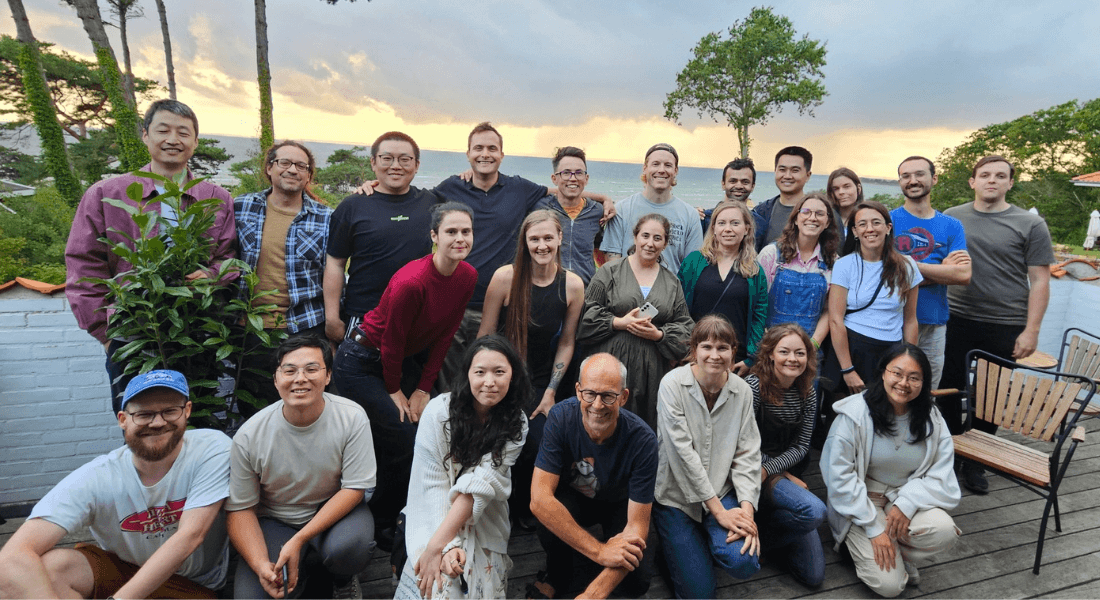
2025 being year 3 of VOLT, means we are now halfway through the first phase of the DNRF grant. With everything up and running smoothly, like many students completing their theses projects each year, productive and informative VOLT-all, journal club and VOC lunch meetings, great field work trips to different parts of the globe, and many social activities, there were still a few significant and successful firsts, like an international symposium, a PhD course and science communication in Brussels for over 5000 school pupils.
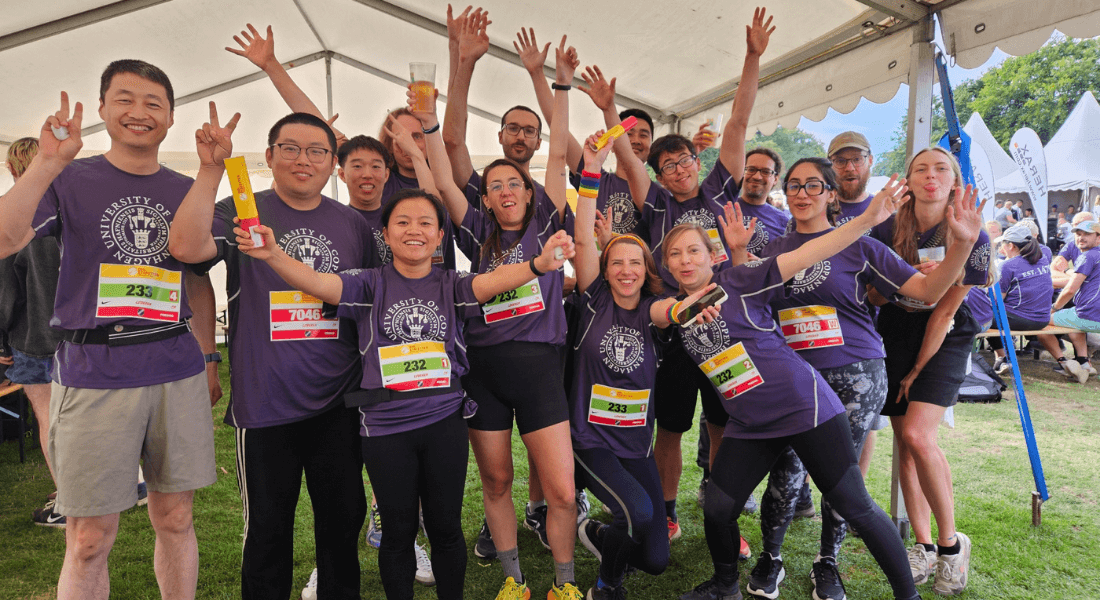
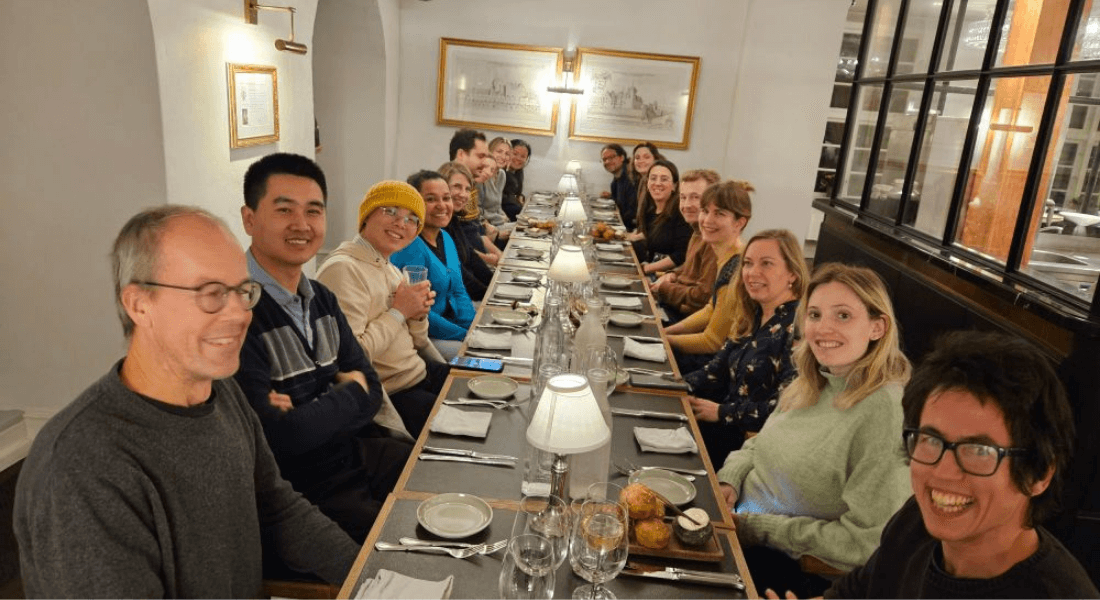
Writing retreat in a remote castle
The year started with a writing retreat at the beautiful Dragsholm castle, where the PIs and most PhDs and postdocs spent two days focusing on writing up papers using the pomodoro technique, discussing, going for walks in the countryside and enjoying nice food. This laid the foundation for what became a very good year in terms of publications, which you can find here.
1st International Symposium on Volatile Interactions in Ecosystems
In May VOLT hosted a very successful international symposium that brought together scientists working with biogeochemistry, chemical ecology and ecosystem-atmosphere interactions related to biogenic volatiles to present cutting-edge research and discuss current progress and challenges in the field. There were contributions from microscopic to landscape scales in terrestrial and aquatic ecosystems, studies on volatilomes and specific volatiles, including volatile organic compounds, volatile nitrogen and sulphur compounds (and excluding greenhouse gases), and remote sensing and modelling.
There were excellent talks, including from three keynote speakers Kimberly H. Halsey from the Department of Microbiology, Oregon State University, Jörg-Peter Schnitzler from the Research Unit Environmental Simulation, Helmholtz Center Munich, and Colin Murrell from the School of Environmental Sciences, University of East Anglia, posters, and plenty of discussions about the work done, possible collaborations, and even having a second edition of the symposium in 2027 hosted by a group in a different country.
With the contribution from the DNRF, we were able to not only organize and host the symposium but also cover travel expenses for selected early-career researchers. Overall, the feedback was overwhelmingly positive from the participants regarding both hospitality and the scientific quality, as well as the opportunity to access a fantastic network and get inspiration from different but complementary disciplines.
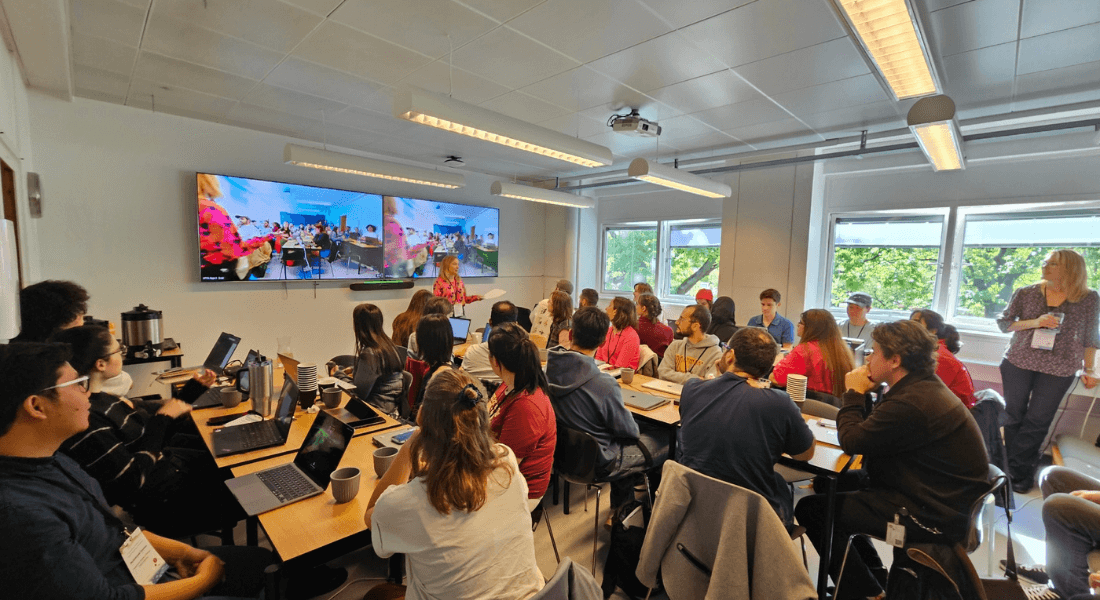
PhD course on Biogenic Volatile Organic Compounds (BVOCs) and Isotope Techniques: Advancing Ecosystem Research
In connection with the symposium, VOLT also hosted a fully-booked PhD course where international students were able to join for learning and training, and then stay on to attend the symposium and, in some cases, even give a talk or present a poster.
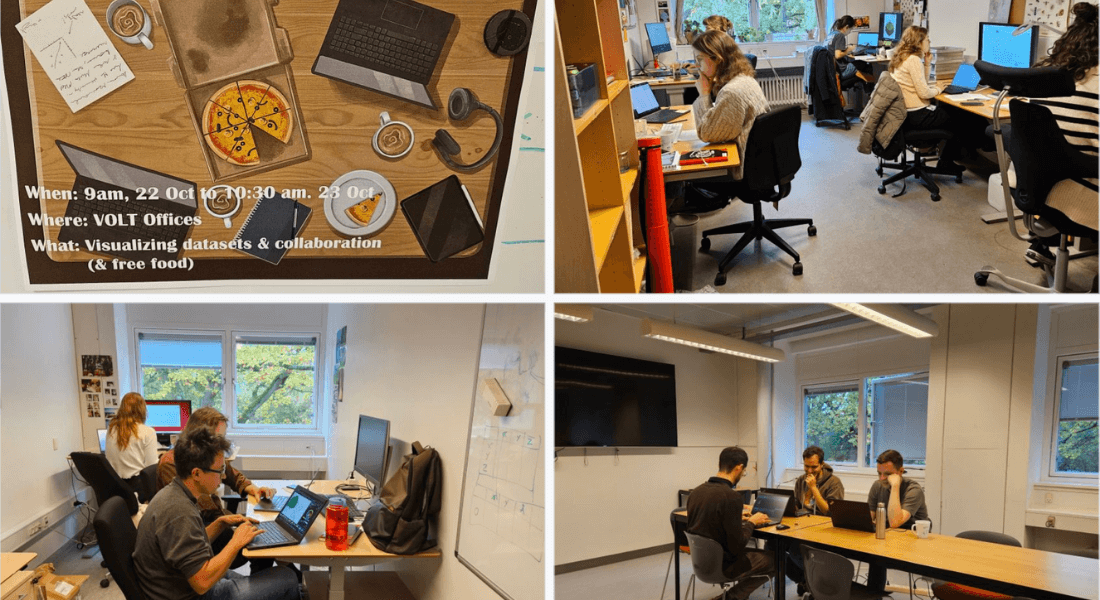
First VOLT hackathon
Another first that was both fun and productive was a hackathon on creative ways to achieve accurate, meaningful and beautiful data visualization. Some members worked in teams and some individually, but there was a great atmosphere and discussions and, in the end, everyone presented their innovative and/or artistic solutions. There were prizes for the most collaborative and the most innovative.
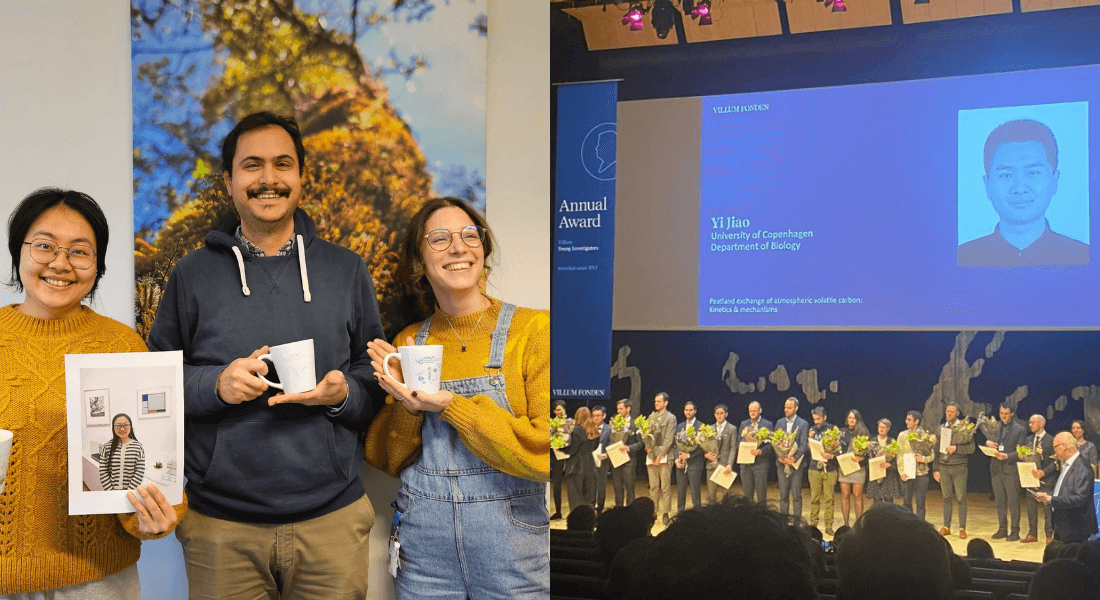
Grant success
In 2025, VOLT members were very successful at obtaining prestigious grants. Here are some examples: at the start of the year, Yi Jiao received a Villum Young Investigator grant, and Marta Contreras Serrano secured an Elite Forsk travel grant to do field work in Australia. We also got not one but four new Marie Skłodowska-Curie Actions fellows: Cecilia Costas Selas, Mehrshad Foroughan, Wanying Zhang, and Yunyao Ma. You can read more about their projects here.
Visitors and collaborators
VOLT is popular among the international scientific community, and our network keeps increasing. In 2025, we had visits and talks from new and old collaborators. For example, Bastien Papinot visited from the University of Iceland and gave a talk about his PhD project on Arctic moss. Christa Marandino from Geomar in Kiel told us about climate-active trace gases and how they are influenced by air-sea interactions. During the summer, we also had a visit from collaborator Noah Fierer from the Department of Ecology and Evolutionary Biology at the University of Colorado Boulder, which ended up coinciding with the date for the VOLT barbecue.
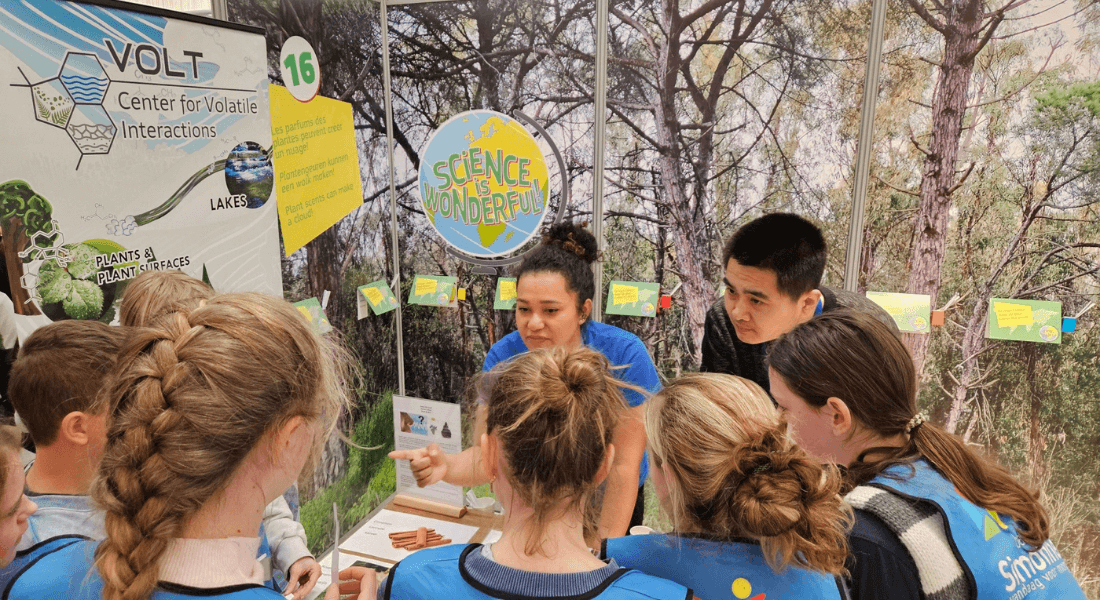
VOLT went places
This year, VOLT’s science reached our biggest and widest audiences, and we have also stepped up the game of how we communicate it.
In March, Yi, Nasmille and Ana attended Science is Wonderful in Brussels, where more than 5000 students from 7 to 18 years old came by VOLT’s beautiful stall. Yi’s proposal was selected as the jury was impressed and looking forward to making a cloud in a bottle. In addition, there was a video on the background with an animation on cloud formation and footage of Yi in the lab demonstrating how essential oils can be extracted by distillation. The booth walls were covered with a picture from a forest in southern Portugal, and there was a little forest tour to explore the different smells and try to guess them. On top of that, Ana wrote a storybook about how gas emissions from nature can influence the weather locally and globally, and then told the story to a very curious audience.
From one of Riikka’s appearances in a podcast, Matilda Tjellden from Aarhus Libraries reached out, and a fun, collaborative project was born, where 12 pieces of a puzzle were made at workshops where participants could learn more about our research and make art based on it. The idea keeps growing, and we will be adding more to it in 2026.
Kajsa Roslund is involved in an exciting and unique multidisciplinary project where she collected gas samples from a cave in the south of Portugal, as well as soil samples from which Luka Civa from the Social and Symbiotic Evolution group grew crazy looking fungi, and Kasun Bodawatta is now working on the genetic identification of this peculiar microbiome. We participated in the Fungi Festival in Frederiksberg, where we gave talks and had a stall with information, and the beautiful fungi Luka grew in the lab. We also made a video with the footage from this unique ecosystem, which you can watch here. Luka went on to win the 2025 DNRF competition with a photo from the cave in Portugal, and Wim Verbruggen got a special mention for his entry as well.
Our Meet the Scientists YouTube series continues, so you can get to know the team through this playlist.
VOLT has also brought the science communication competition Falling Walls back to Denmark, after its last edition in 2017, and we sent our national champion to represent the country at the final in Berlin.
In addition to the general public, our science was also vastly presented to and discussed with international peers at various conferences attended by our PIs, PhD students and postdocs. A couple of examples are the EGU 2025 and the SAME18 aquatic microbes conference.
After a well-deserved break at the end of the year, we are now re-energized and ready and looking forward to an even more ambitious and successful 2026!